
How to get your mindset right for leading one on one meetings

This is the first in a series for people who want to use one-on-one meetings as a good tool for leading the efforts of their team members

It’s based on my short ebooklet available from Amazon here – free to Kindle Unlimited members or otherwise £1.99

You can read the rest of the tips when published here. They’re essentially a summary of the booklet.

By way of introduction, I wrote that short ebooklet when, in the space of a fortnight, three separate coaching clients mentioned that they were struggling a little with running their one-to-one meetings with their individual team members. It’s easy to cover those kinds of issues in a coaching session, but it seemed to me that it would make better use of my clients’ time in our sessions if I could also just give them some simple guidance to take away and use as and when they wanted. I hope that the booklet has been useful – it’s been slowly working its way up the independent management books charts anyway. The next in the series will cover Delegation.

All great management starts with the manager’s own mindset. To make a good management process work well, it isn’t enough to know what to do and how to do it, you also need to know what attitudes of mind are likely to get the best results for you. Here are the most important ones for running great one-on-one meetings:

  1. Empowerment as an outcome of your managementyou’ve got to want to inspire people to get more done under their own motivation and responsibility.

It’s a bit like having teenagers, they need to learn how to do stuff for themselves. Until you’re prepared to adopt this as part of your mindset, you’re likely to be spoon-feeding people and picking-up after them long after they could have learned to do it for themselves. I think the trick here is to actually include empowerment as one of the outcomes you’re after. Put it up there alongside the tasks that you want this person to achieve and give it as much, if not more, weight as all the other important stuff you need to ensure gets done.

  1. Coaching as a leadership stylewhere you put a big chunk of your leadership energies into the longer-term development of others.

It’s not the only leadership style you’ll need to use, but it is very effective and very rewarding for you. It’s also a good partner to empowerment. You could think of a coaching leadership style as being NOT about you as leader having the answers, but about guiding people to find their own answers to things.

If I had to encapsulate it in a single phrase for leaders to use, it’d be something like:
“How about trying this…?”

  1. The transition from doing to leadingthe more your responsibilities increase, the more you need to shift from actually doing stuff yourself, to getting stuff done by acting through others – by leading.

If you’re like most people, you’ll have got to your position at least partly because you’re good at what you do. And so this can sometimes be a tricky transition to make, or even to be aware of its significance. It’s also quite scary because of course it takes you outside of what you know you’re good at doing, into possibly new territory – and people are often much more complex to understand and influence than the tasks themselves.

But this is a really important place to get your head into. Take a deep breath, stop doing stuff yourself, and start making sure that you act through others.


Let me know what kind of mindset works well for you, when running your own one-on-one sessions with your team members please? Either leave a comment below if they’re still open at the time of reading, or tweet me @nickrobcoach.

To make a good management process work well, it isn’t enough to know what to do and how to do it, you also need to know what attitudes of mind are likely to get the best results for you. Share on X


The Motivation Equation and Self-Belief (part 1 of a series)

How to define the outcome and establish your evidence in order to get more Self-Belief and better Motivation at work

I’ve written before about The Motivation Equation and how leaders can use it to motivate themselves and others to get great results and feel good about their work.

In that original article, I said that motivation is like a chain. Our overall willingness to get stuff done and our overall feelings about our ability to achieve things are only as strong as the weakest link in that chain. In other words, in order to spur ourselves and others into action and to feel good about the ambition behind it, we first need to make sure that each of the components of the Motivation Equation as strong as possible.

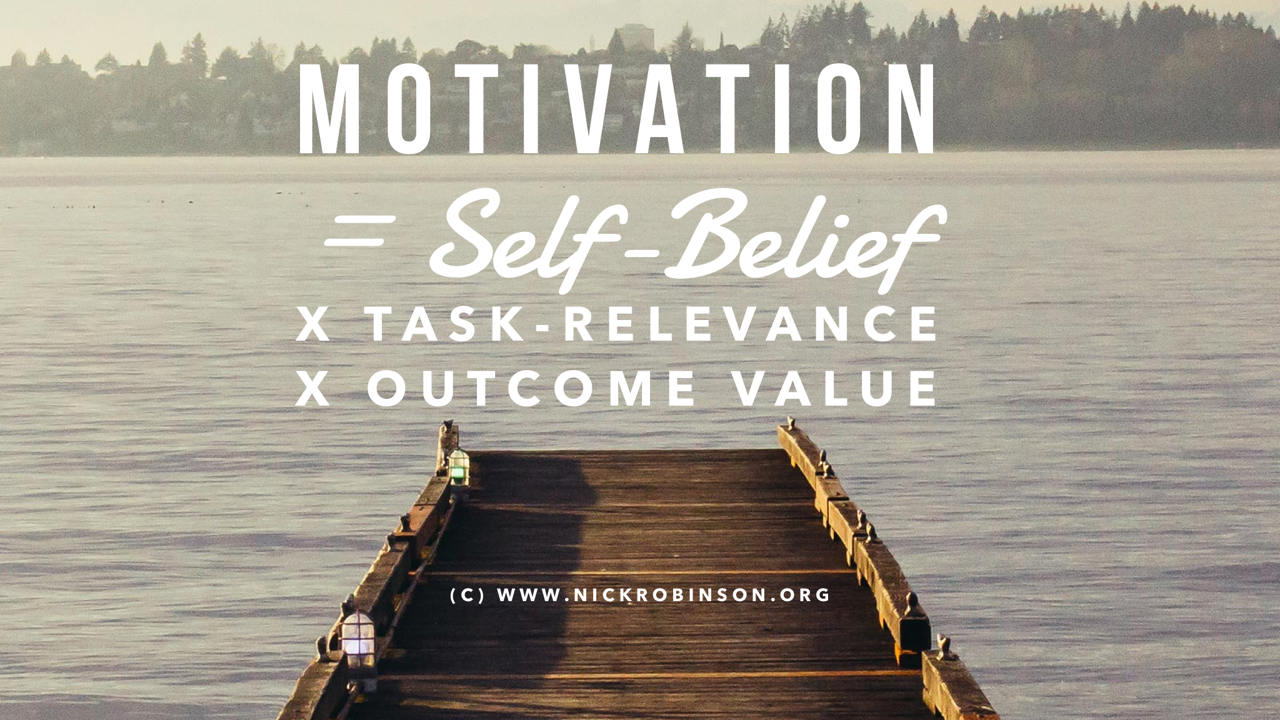
Here’s the overall equation: The Motivation Equation: Motivation = Self-Belief x Task-Relevance x Outcome Value Share on X

We can think of each of the links as a kind of question or judgement that people make about themselves and their situation. For example, in the Task-Relevance link, people might ask themselves: “If I do this task well, will it lead to the outcome that’s required?

This series of articles will take that much further and deeper, in a bite-size way, by looking at each of the links in turn, starting with Self-Belief.


Healthy Self-Belief – Steps 1 and 2

If you want to motivate yourself or someone else to have more self-belief – either as a way to increase motivation, or just because the right amount of self-belief is usually a good thing – you’ll find the first of my seven essential steps to healthy self-belief set out below.

In terms of our overall Motivation Equation, the question that people ask themselves or the judgement that they’ll be making about themselves or their situation for the Self-Belief link in the chain, is this:

Self-Belief is about asking ourselves, 'Can I do this task well?' Share on X

One thing that’s really worth emphasising at the outset is that self-belief is highly-contextual. That is, it depends on what we’re doing, where we’re trying to do it and what our situation is at the time. This is one of the reasons why self-belief can vary so much over time. It’s also why my first essential step is about getting really clear about that context:

1. Define the Outcome

What exactly is it that you’re trying to do?

You might be surprised at the number of people I coach who’re not feeling good about their self-belief precisely because they haven’t been clear enough about what, specifically, it is that they’re trying to achieve.

I think that this is partly a kind of defence mechanism – if we’ve been vague about what we’re trying to get done, then we can be similarly vague about whether or not we actually succeed. But that kind of hedging your bets, not being clear about the outcome you want, or avoiding getting too specific makes it much more likely that your motivation will be similarly ill-defined.

So don’t be vague, get clear about the outcome you want to achieve. What exactly is it that you’re trying to do?

For most people, it can also really help to then consider step 2:

2. Establish your Evidence

How will you know when you’ve done it well?

Again, this is such a simple step, but one that can often get overlooked. It’s also one of the reasons why I encourage people to celebrate and mark the occasion when they’ve achieved something significant. By looking back at it in this way, people get used to evaluating things in a much more rounded way, including the emotions involved in that accomplishment as well as the hard data.

I think also, that one of the reasons why we might avoid doing that kind of post-achievement reflection is because things rarely go as well as our secret desires had hoped for. There’s usually some wrinkle, or some aspect that wasn’t as perfect as we might have hoped.

So don’t wait until afterwards to set-up those measures. Have them be transparent right from the outset. Ask yourself these questions:

  • How will I know when I’ve done this task as well as I’d like to?
  • What will I see, hear and feel that will tell me I’ve achieved it as I’d like to?

And remember to reflect on and celebrate those things afterwards too!


In summary:

The first two steps towards healthy self-belief are: 1. Define the Outcome and 2. Establish your Evidence. Share on X

In the next article, I’ll continue with the Self-Belief link in the motivational chain and will look at:

  • Enabling Beliefs – what we believe enables us to do something well
  • Reason Beliefs – what we believe is the reason for being able to do something well.

I hope that’s been helpful in some way and that this bite-size approach works for you. Please look out for the forthcoming articles in this series. As they’re published, I’ll hyperlink them here.

As usual, please leave me a comment if they’re still open below, or tweet me @NickRobCoach. Tell me about your own experience of motivation and self-belief, either as a leader working with other people, or for you personally?


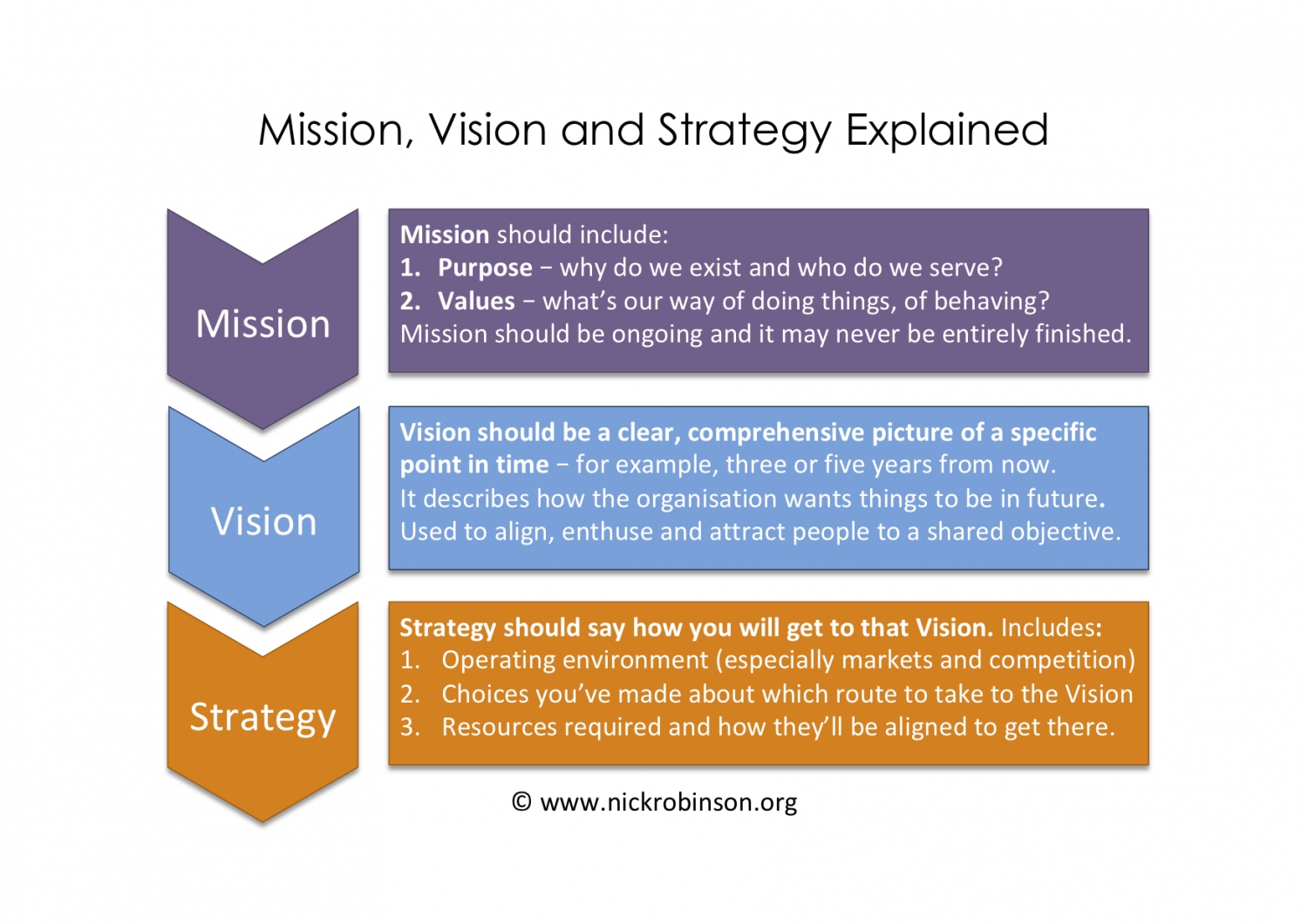
Mission, Vision and Strategy Explained on One Page

Everybody is getting Mission, Vision and Strategy mixed-up and wrong – so here’s a handy one-page guide.

I don’t do much strategy work these days, in favour of my one-to-one and team work. But, I do get a little fed-up with all the remedial team and leadership coaching I need to do which is partly driven by organisations getting some of their structural factors wrong.

In particular, nobody seems to understand how Mission, Vision and Strategy should play nicely together, cascading from the top down. Other stuff that really bugs me includes:

  1. Why do organisations work on their values without having a good idea what their purpose is first? No wonder their people are confused about what their priorities are and how they should be behaving!
  2. And why don’t businesses get their long-term mission straight, before thinking about the mid-term or immediate future?
  3. Why does nobody seem to have a compelling vision now, instead of “Oh, let’s just carry on as before but maybe do a bit more of it.“?
  4. Why is everybody so terrified of doing proper competitive analysis that their strategy is really just a list of stuff they were going to do anyway, instead of a way to win in their marketplace?

Anyway, rather than just rant, I thought if I put it all on a handy one-page guide, that might actually be useful. Click the image above and then alt-click it to save as or download your copy.

Tell me I’m wrong, and that your organisation has a proper, cascading Mission, Vision and Strategy covering all the points I’ve listed?

“Thanks, your work was almost adequate”

What should leaders say and do when someone’s work is disappointing?

The comedian Henning Wehn performs a joke about a German baby that doesn’t speak at all until it’s five years old – and only then to complain that things are no longer satisfactory.

Here he is delivering the punchline to Alan Davies’ setup on BBC’s QI:

This joke actually tells us a lot about the causes of a problem that leaders sometimes share with me – what should you actually say when someone delivers a rather disappointing piece of work and then expects some praise or thanks from you?

My challenge to those leaders when they raise this issue is this – have you been a bit like that German baby and been too silent until now?

By which I mean the following:

  • Have you previously set out clear enough expectations of what a great solution to this work would look like?
  • Have you previously given this person enough positive feedback so that they know what their strengths are and how much you value them?
  • Have you previously spent enough time coaching and developing this person, so that they’re definitely capable of delivering what’s required?

If you can’t honestly put your hand on your heart and say “Yes, I have previously done enough of that”, then you’ve been too much like that German baby and have spent too long being silent because things were tolerable before.


Your choices now that the disappointing work has been delivered are much narrower than before. And – and this is really important – the blame probably lays at your feet, because it means you’ve likely missed one of the factors I’ve described above.

I’ve spent lots of years not quite living up to my own standards as a leader and have coached loads of others through similar situations, so I have some experience. Here’s how I would chart my way through a ‘disappointing output’ situation:

  1. Say a proper thank you, like you mean it;
  2. Own up in a neutral and non-complaining way: “This is different from my expectations, can we talk through that?”
  3. Be specific: “I was expecting ‘A’ and this looks like ‘X’.”
  4. Ask for what you now need. If you can live with the output as it is, but want it to be better next time, skip this stage and the next. If not, you need to say something like: “I do need this to meet the following criteria (and list them), so I will need you to re-work it please.”
  5. Ask them to describe their version of that output ‘X’, by saying something like: “Tell me how you’ll know that you’ve done a great job on this, before it gets to me?”
  6. Ask for what they need from you: “What support, resources or information might you need from me, so that you can do a great job with work like this?”

Leading is a tough job. And even when you have done everything I’ve suggested above, people will still deliver disappointing outputs to you, for a whole load of reasons. Don’t be too tough on yourself though, despite my accusing you of being like that German baby!

My point is, it isn’t necessarily your fault, but it is your responsibility. If you want to be a great leader, and you’re not getting the results you want – try a different way. And if that doesn’t work, try another.

And don’t be afraid to seek that support that you need, so you can be as resourceful and flexible in your approach as you need to be.

Thinking at work isn’t dead – is it?

The smartest bloke I ever knew used to start his working day by putting his feet up on the desk. Is that still important?

I’d gone to work in his department from a demanding operational job and it was a shock to see all this apparent leisure happening. So I asked him what he was doing and got the predictable answer:

“Thinking!”

Just recently I’ve been coaching in a couple of organisations where the amount and quality of thinking left a lot to be desired!

Problems which could have been worked through seemed mystifying.
Rewarding opportunities, which a little bit of smart analysis would have highlighted, were lost in a frenetic chasing of the more obvious.

My smart boss was quite fierce about it:

“I recruited you to do the smart thinking too. So you’d better find your own way to make it happen.”


But it’s not just the business benefits that make good thinking so important. The future of work is going to be very different, just in the next few decades compared with today, driven by an exponential growth in the use of artificial intelligence (AI) in the workplace. It might not be too strong to say that:

In the future, if you’re not thinking at work, you won’t be at work!

AI experts say that the human talents they believe machines and automation may not be able to replicate are primarily about:

  • creativity
  • collaborative activity
  • abstract and systems thinking
  • complex communication
  • the ability to thrive in diverse environments.

All of those require at least a modicum of good quality thought.


If you’re a business owner or a leader in a larger organisation:

  • How much good thinking are you doing yourself (whether you have your feet up on the desk or not)?
  • How do you make sure that your teams are doing enough good thinking?


Managing or Leading?

Trying to be a great leader without also being a great manager is like an army with loads of generals but no sergeants

Today there’s a lot of emphasis put on being a good leader in organisations of all shapes and sizes. This is only right; leadership is one of the things that can make the difference between a business or an organisation being just OK and being great.

What I think leadership can’t do on it’s own, is to take a business from being new or poor to being OK. Or to sustain greatness once it’s been reached. To do those things, you also need great management.

I sometimes see individuals and organisations making the mistake of thinking that leaders and managers are different people. Maybe it’s an ego thing? Or something sensible to do (at least on an individual, short-run level) because maybe ‘leaders’ are considered more important than or get paid more than managers?


Whatever the reason, I reckon that a better way to think of it is as the way that people in your organisation spend their attention.


Way back in the early twentieth century, industrialist Henry Fayol wrote that all managers perform five functions: Planning, Organising, Commanding, Coordinating and Controlling. These days people still use Fayol’s definition of Management, but tend to shorten it to:

  • Planning
  • Organising
  • Leading
  • Controlling.

Right there we can see that the very definition of management actually includes leading – that is, leadership is a subset of managing and not a replacement for it.

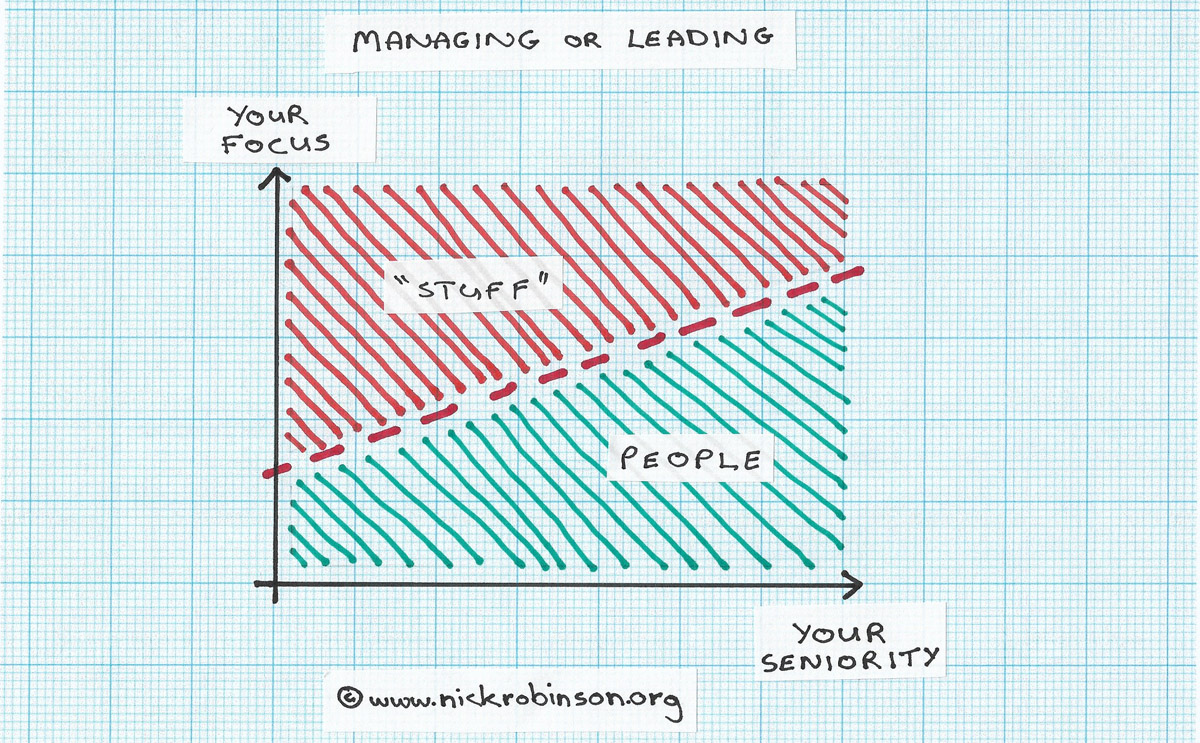
Think of it this way – and I’ve tried to show this in the graph at the top of this article:

As you get more and more senior in your organisation the focus of your attention should shift away from the “Stuff” that’s involved in doing the Planning, Organising and Controlling that Fayol described. Now you need to give more of your attention to People. And that’s where your skills as a great leader come in.

You have to do this. A lot of my coaching work is about helping people to make this transition, to shift their focus away from managing the stuff and towards inspiring and empowering people.

If this isn’t done, if senior people don’t make this shift, it’s very hard for individuals, teams and whole businesses to rise above ‘OK’. This is why, when you ask someone how they’re doing, and they’re doing alright but not brilliant, they’ll reply: “It’s OK, I’m managing.”


However, this doesn’t mean that you do no management at all as you get more senior.

In fact, I’d argue that the smaller amount of your time and attention that remains available for managing means that you need to be really, really efficient and effective at it.

Your Planning and Organising needs to be spot-on AND to include other people, so that they can contribute to and buy into it. Your ability to Control (monitor, feedback and adjust) has to be light-touch, well-connected to the overall purpose of the business AND flexible and robust enough to adapt to external conditions.

As you make that essential shift and give more of your attention to leading through others, don’t forget how to still be a great manager too.

The sergeant is the army
Dwight Eisenhower


Leadership Quickies

Four leadership mistakes you probably don’t even know you’re making

1. Not giving one-to-one attention to each of your team members
Leaders should act as a mentor or coach and listen to each person’s concerns, needs and ambitions, giving empathy and support, keeping communications open and setting challenges. This fulfills a deep need for respect and celebrates the individual contribution that people can make to the team. You’ll very quickly lose the right people and bring out the worst in the wrong people if you don’t do this.

2. Being safe and boring
A steady pace is all very well, but people and organisations sometimes need a leader to challenge assumptions, take risks and ask other people for their ideas. This helps stimulate creativity and develop independent thinking. When times become hard, you’ll wish you’d fixed this particular roof when the sun was shining.

3. Not having a Vision
Being able to talk about an inspiring and attractive view of the future position of your team, department or organisation is perhaps the key factor that sets great leaders apart. It isn’t difficult and it doesn’t have to be grand or world-changing (unless it is); but you do need to do it.

4. Forgetting that You’re a 24/7 Role-model
I get that it’s a tough thing to be an always-on role-model. Everybody looking to what you say and do, all the time. It is wearing. And it also just comes with the territory. People will adopt their way of doing things from watching you. Please remember that you need to be a role model for the right behavior, so that this instills pride and gains respect and trust. You don’t need to always be perfect – that isn’t possible for anyone – but you do need to visibly put it right when you haven’t been.


Through a Glass Clearly

Coaching with clients’ symbolic non-verbal cues with respect and empowerment

One of the many things I love when I’m one-to-one coaching is when clients unconsciously start drawing shapes in the air, or writing on an imaginary whiteboard or using their hands to position symbolic thoughts, people and objects in different places around themselves. It’s clear that people’s hands and bodies are directly connected to the inner workings of their mind and are often able to represent things quicker and with more clarity than words alone can do.

In my experience, all the qualities of these shapes, diagrams, air-writings and positionings are great doorways into deeper understanding and will open up many new possibilities for insight and action with my client, if I treat them right.


I always try to be really respectful of what they’ve just ‘drawn’ and to not impose my own frame of reference on things. Here’s a technique that I like to use which I believe really helps to get more insight and action, without me the coach getting in the way.

Because my client is often sitting across from, not next to me, I’m not seeing what they’ve ‘drawn’ from their perspective. Suppose I want to ask something like this, so we can get deeper into what it means:

“I notice that you just drew that as a kind of curve; whereabouts are you on the shape of that curve?”

And as I ask that question, I’ll usually want to redraw that curve for them, so they can see it again for themselves but consciously this time.

Here’s the important bit – I reverse the frame of reference so that I’m mirroring, not reproducing what clients have done.

If they’ve drawn that curve in the air from their left-to-right, I’ll redraw it, but from my right-to-left. If they’ve picked-up an imaginary object, person or idea and moved it over to their left, I’ll play that back to them, but make sure that the thing I move also finishes-up on their left. I imagine that I’m tracing whatever they did back to them, from the other side of a glass whiteboard.

I believe that this approach is so crucial, because I don’t want it to be my thing – what I do want is to empower them to get more understanding about the thing they ‘drew’ or ‘moved’.

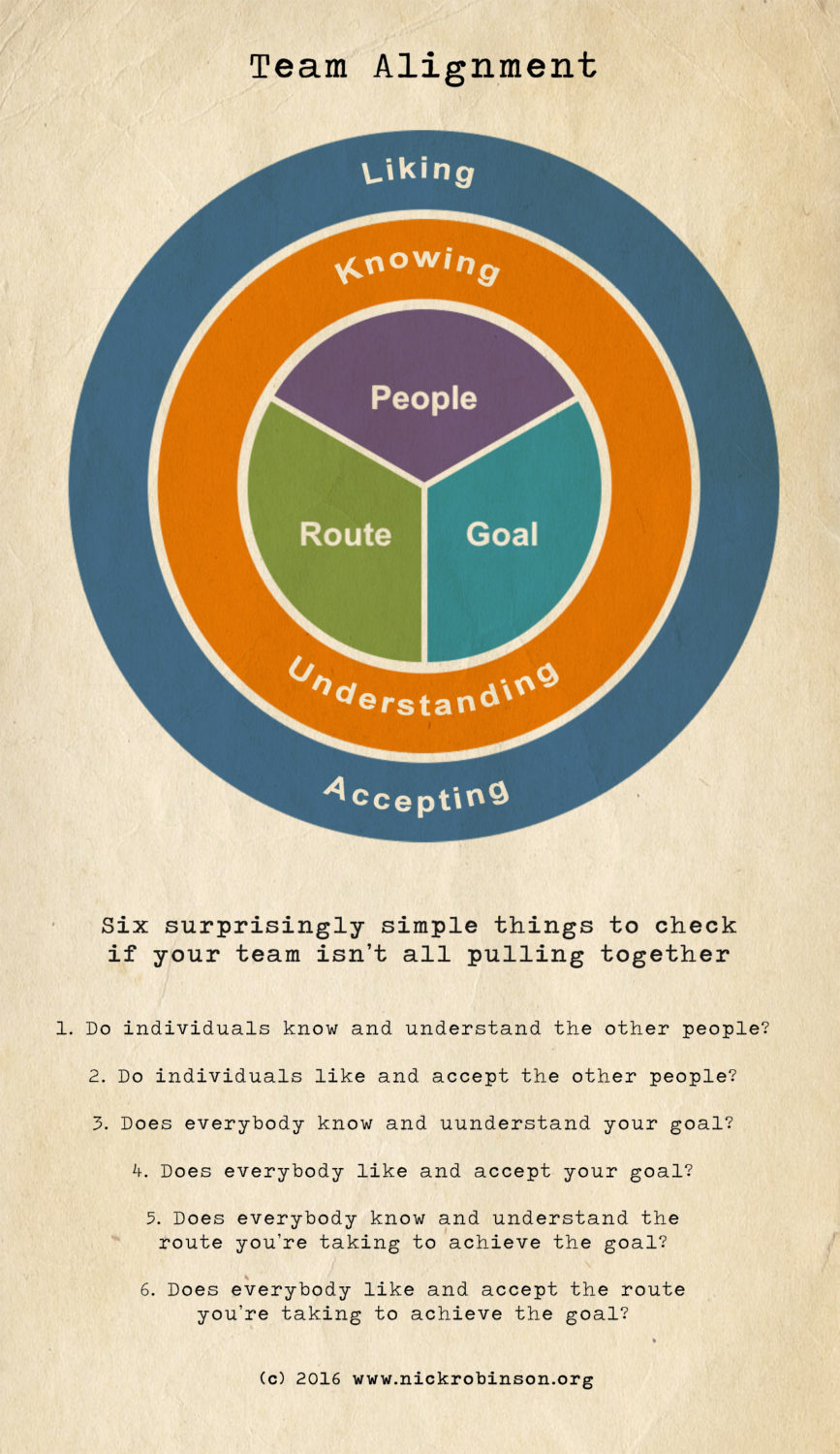
Team Alignment

Six surprisingly simple things to check if your team isn’t all pulling together

How to do Inspiring Visions

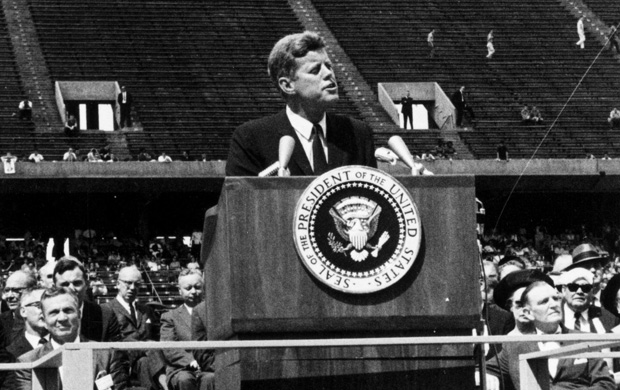
JFK’s “We Choose to go to the Moon…” Speech

Lots of stuff on tv at the moment about early space exploration, reminded me of this video – one of the most inspiring ‘big vision’ speeches ever. President John F Kennedy speaking at Rice University in September 1962.

Scroll down and play the video to see for yourself.

After the video I’ve put some tips of my own about the kind of things that this sort of ‘vision’ speech needs to include.

And if the video below ever stops working, go to YouTube and search for “JFK  go to the moon speech”.

Some brief thoughts about the key elements to include in making your own inspiring vision speech:

  • Re-calibrate – not all of us are planning on moon landings, but don’t let that make your vision any less important than this
  • Challenge – notice how President Kennedy makes it clear that there are big obstacles to be overcome. The right amount of challenge is what makes life worth living and work worth doing
  • Sensory Details – you can almost feel what it’d be like to be on that mission, the heat, being cramped in the capsule; really brings it to life
  • Tangible Measures – there’s lots of facts and figures in this vision “240,00 miles away”; “a giant rocket more than 300 feet tall”; I can see and imagine those much more readily because of those numbers
  • Metaphor –  “…fitted together with a precision better than the finest watch”; do you go away knowing exactly how precise he wants you to be and how to explain that to somebody else?
  • “We”“Because that challenge is one we intend to accept, one we are unwilling to postpone and one we intend to win”; I’m rolling my shirt-sleeves up to get stuck-in right away
  • Present tense – he really switches into the present tense towards the end “Re-entering the atmosphere…”; again this just helps to feel like you’re already there. I can believe this vision because I’ve practically lived it even before he’s finished speaking
  • Upturns Convention“Not because it is easy, but because it is hard”